

Support for participation in pre-primary education and learning
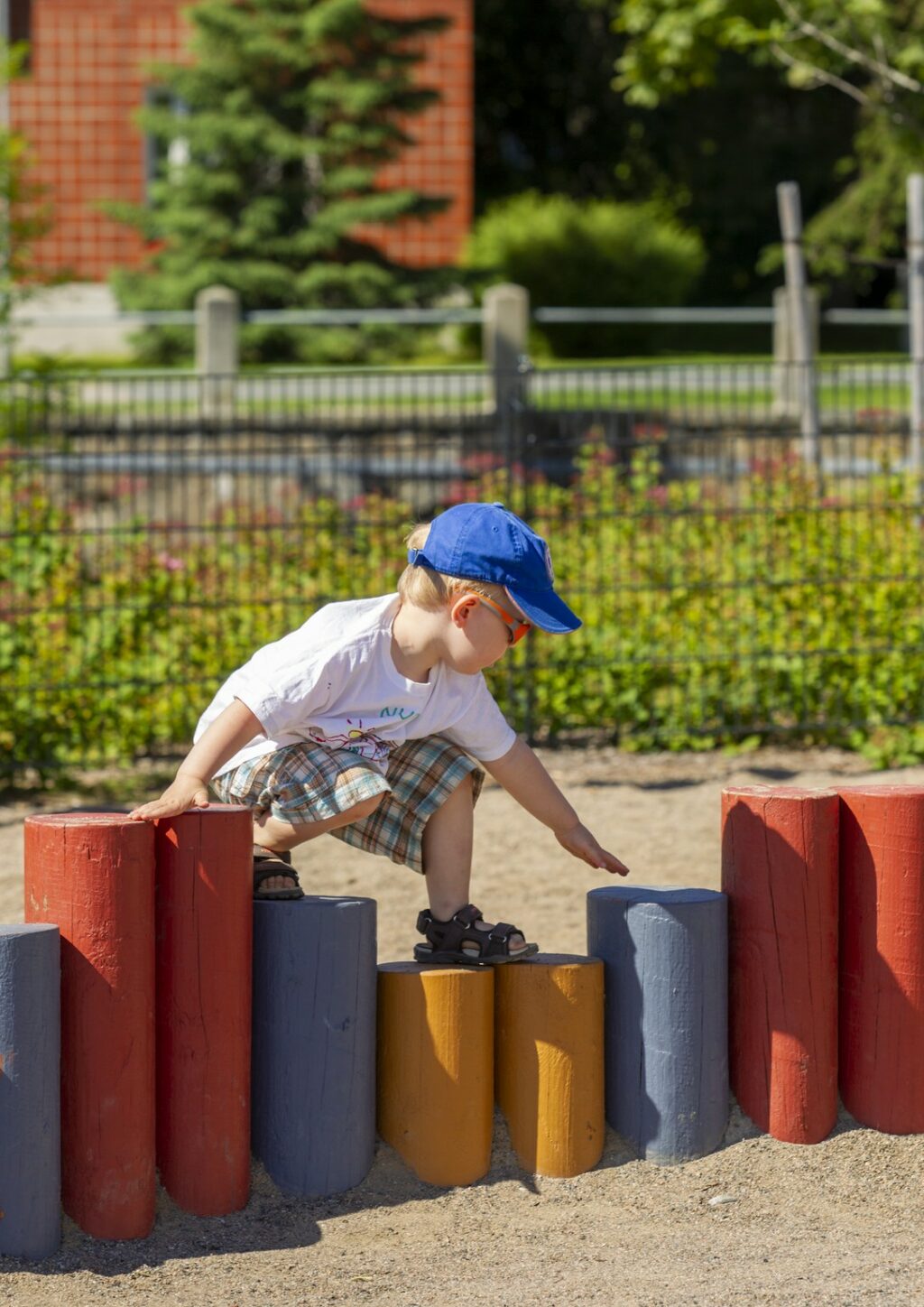
In pre-primary education, a child’s learning and participation can be supported through a variety of means. Pre-primary education practices and learning environments are adapted to help ensure every child can learn and be part of their peer group. The group’s needs are met through a variety of teaching arrangements and group-specific forms of support, which promote the learning and participation of all children, as well as their becoming part of the pre-primary education community.
Teaching arrangements that support the prerequisites for learning form part of all pre-primary education activities. The aim of these, and group-specific forms of support, is to prevent more substantial needs for support from forming. The teaching arrangements and support forms realised in a group are intended to benefit multiple children. This helps to support all children’s equal right to learning and to ensure arrangements based on the children’s needs in terms of the organisation of teaching and learning support.
If group-specific support means and teaching arrangements to support learning are insufficient to meet a child’s needs, the need for child-specific support will be assessed. Child-specific support is subject to a decision as set out in the Administrative Procedure Act. A child-specific support decision can determine the aids, interpretation and assistant services, and regular or full-time teaching provided by a special educational needs teacher, that a child would benefit from
-
Student welfare refers to the promotion and maintenance of a child’s good learning, good mental and physical health, and social wellbeing, and activities that boost their prerequisites for pre-primary education.
Student welfare is carried out in systematic collaboration between pre-primary education staff and the Wellbeing Services County of North Savo, and the children and their guardians, along with other parties as necessary. Student welfare is the shared task of all professionals responsible for student welfare services and those working in pre-primary education. These services are provided by psychologists, school social workers, child health clinics, and individual-specific expert groups. Student welfare is, therefore, both collective and individual work.
Collective student welfare is preventative and the primary way of realising student welfare in pre-primary education.
Each pre-primary education location has a unit-specific student welfare group led by the director of the early childhood education and care unit. This multidisciplinary collective student welfare working group include, alongside the director of the early childhood education and care unit, a nurse from a child health clinic, a school social worker, a school psychologist, a special educational needs teacher in early childhood education and care, a representative of the pre-primary education staff, and a representative of the guardians. In the student welfare group, matters are only processed at a general and collective level. The unit-specific student welfare group meets systematically at least twice per academic year. During the autumn meeting, they draw up a unit-specific student welfare plan, which further specifies the City of Kuopio’s pre-primary and basic education student welfare plan for all pre-primary education groups and schools.
In addition to collective student welfare, children have the right to student welfare services, comprising school social worker and psychologist services and child health clinic services aimed at their age group. Individual student welfare is always based on the guardian’s consent. The child’s participation and their views and opinions are taken into account in solutions affecting them, at a level appropriate for their age and developmental stage. Interaction is open, respectful and confidential. Regulations concerning the disclosure and confidentiality of data are adhered to in student welfare work.
-
the prerequisites to start their studies, based on psychological and, if necessary, medical reports. The guardian must acquire a statement from a private service provider. The education organiser may, on the basis of the aforementioned reports, permit the child to start basic education a year earlier than is set out in law.
If necessary, the guardian may request that the child defers starting school. A psychological or medical statement setting out the grounds for the deferral request must be attached to the application.
Further information can be found on the basic education page.
-
The objective of early compulsory education is to strengthen a child’s readiness for learning, so that they have the chance to learn and develop to their full potential. The child starts pre-primary education early and compulsory education begins a year prior to what is required by law, if the child is assessed as needing more time to achieve the objectives set for pre-primary and basic education due to a disability, illness or factor restricting their ability to function, which affects their ability to learn and overall development.
The compulsory education of a child who has received an early compulsory education decision will begin in the year in which the child turns six years old. The child will participate in pre-primary education, which will form part of compulsory education. A child who has received a decision shall be entitled to receive pre-primary education in the year in which they turn five years old. Pre-primary education can last for two years, when the child is five and six years old.
Any available psychological or medical statements or other similar reports regarding the child will be used when issuing an administrative decision on early compulsory education. For these decisions, it is key that the statement or report shows why the child would benefit from early compulsory education. Any views on the child’s situation established in collaboration with healthcare services, either before or during the assessment, may also be used.
Any decision will always be based on an overall assessment of the child’s situation, their strengths, and their individual needs for support. If the child has another guardian, they must give their consent to the application.
Application to the early compulsory education
Consent to the child’s application for early compulsory education
(to complete the application, you must identify yourself through the Suomi.fi service) -
Pre-primary education for children who are receiving specialised medical care is provided primarily in the child’s own pre-primary education group.
Alava School is the City of Kuopio’s hospital school. Alava School provides comprehensive rehabilitative education to maintain participation in learning and pre-primary education and support the child’s treatment objectives. Alava School organises education in various units at Kuopio University Hospital and the NEVA unit at Niuvanniemi Hospital for pre-primary and basic education pupils undergoing examinations and in-patient treatment. Furthermore, at Alava, Laine and Puistola Units, education is provided on a fixed-term basis for children who are receiving treatment from a specialised medical treatment outpatient clinic.
For more information about this, click here.
More information: