
Kuopio tackles water use challenges in mines and prepares for cyber threats to water supply
Kuopio is home to the most versatile and multidisciplinary cluster of water expertise in Finland, Kuopio Water Cluster. The cluster seeks solutions to problems ranging from water use in mines to water-related security challenges, such as cyber threats. Kuopio wants to become Finland’s most significant research and development platform for water technology innovations by 2030.
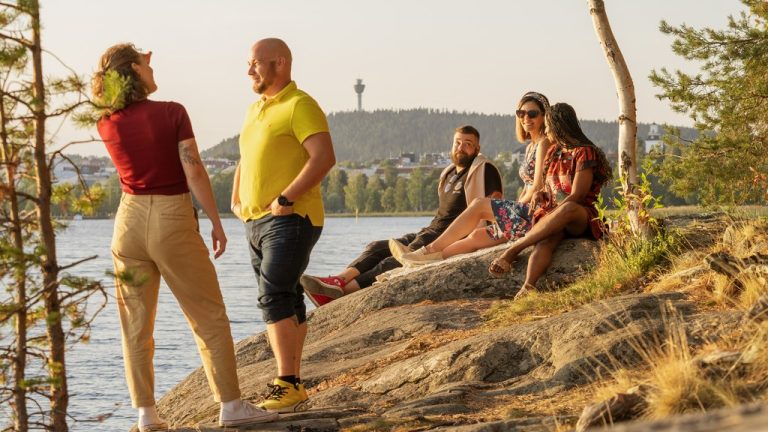
Kuopio is known for many things, including kalakukko, a traditional Finnish dish from the Savo region, and Minna Canth, a pioneering Finnish writer and activist. The city is also called ‘the Pearl of Lake Kallavesi’ after its bordering lake. Few people know, however, that Kuopio is home to the most versatile cluster of water expertise in Finland.
Kuopio Water Cluster offers product development, testing and commercialisation services to water technology companies. The cluster’s guiding theme is water security, with zero-emission industry and intelligent water supply systems at the forefront. But why was the water expertise cluster built in Kuopio of all places?
“Water is everywhere in Kuopio. It’s like an island in the middle of a vast network of lakes, which is a key part of the city’s culture, history and life. Around 25 per cent of Kuopio’s surface area is water,” says Arto Holopainen, Chief Innovation Officer at the City of Kuopio.
Water-related research has been conducted in Kuopio since the 1980s.
“The cluster strives to further accelerate and strengthen the creation of new innovations and solutions, specifically in the water sector, together with researchers and companies,” adds Eero Antikainen, RDI Manager at the Environmental Engineering department of Savonia University of Applied Sciences.
Powered by five research organisations
Kuopio Water Cluster was founded in 2019 around the region’s strong water expertise. There are five research organisations behind the cluster: Savonia University of Applied Sciences, Geological Survey of Finland (GTK), Finnish Institute for Health and Welfare (THL), University of Eastern Finland (UEF) and Natural Resources Institute Finland (Luke).
“Our key strength is that all participating organisations are within a stone’s throw of each other. We all also conduct water-related research and have our own sector-specific expertise,” says Eero Antikainen.
Since its founding, more than 70 corporate members have found their way into the cluster. When research expertise is combined with business capabilities, it provides a good framework for developing new solutions for the water sector.
“We want to take a few steps forward from the so-called ‘basic research’ and get closer to real solutions and perhaps commercial applications,” Antikainen says.
The cooperation between the five strong research organisations has not turned into muscle-flexing. According to Antikainen, each organisation has found its own area of strength within the cluster.
“Given the Finnish mindset, we could be bitter rivals. But we have learned that we are stronger when working together,” he says with a laugh.
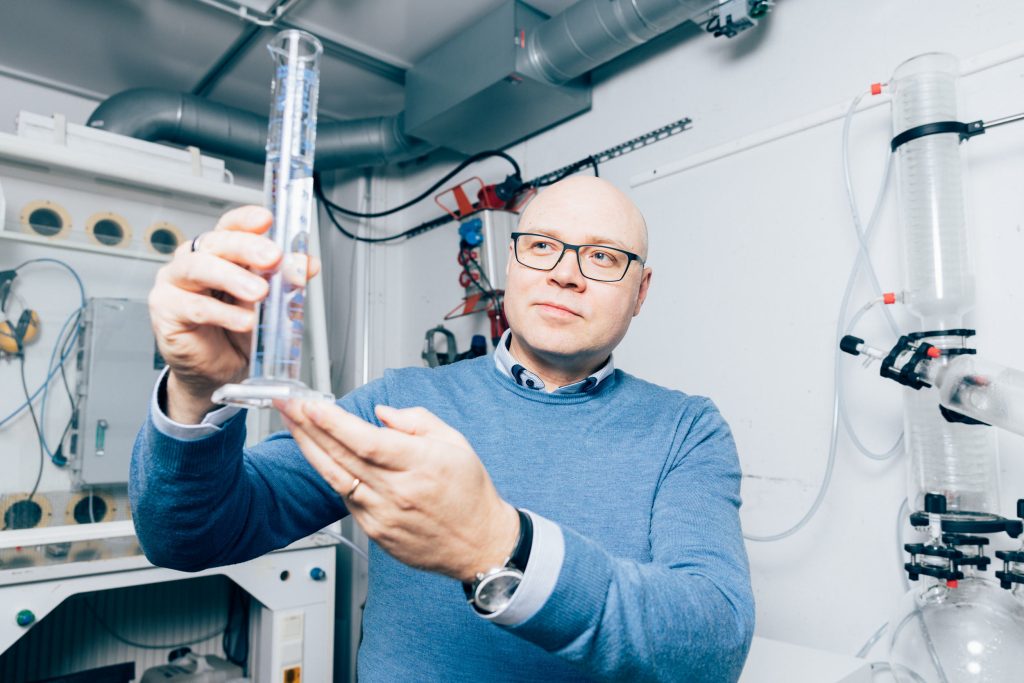
Aiming for a zero-emission industry: from Kuopio’s bedrock to global mines
One of the research areas of Kuopio Water Cluster is zero-emission industry – industry that produces no greenhouse gas emissions or water pollution. The aim is that water-intensive industries typical of Finland could work in harmony with the environment. To this end, wastewater treatment methods and industrial water cycles are being developed in Kuopio.
Mining is an industry that causes a lot of emissions both in Finland and abroad. However, mining companies have become increasingly aware of their emission problems, and the mining industry is one of the most active partners in the cluster. For example, mines want to reduce their need for clean water and develop systems that circulate the same water in mining processes for as long as possible.
“Modern societies cannot function without mines. There are also prospects for increasing mining activities, but we must make them as environmentally friendly as possible,” says Antti Pasanen, Senior Specialist at GTK.
A zero-emission mine cannot be achieved without well-planned water management. The most widespread emissions from mining operations arise from the transport of pollutants into the environment through water.
“When it comes to water use in mines, the rule of thumb is that there is never a suitable amount of water. It’s always too much or too little. In Finland’s case, water usually has to be removed. The Talvivaara case shows that if water management fails, you can go bankrupt.”
GTK’s role in the cluster is in research and product development, and mining companies are often the end customers.
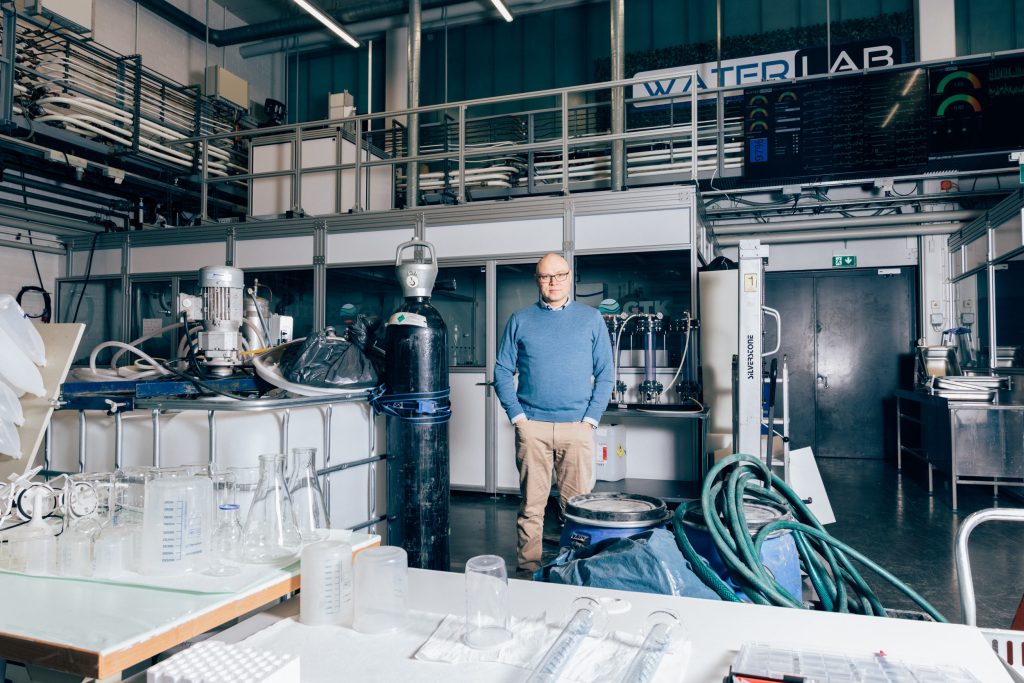
“We pilot different methods on a container scale. It’s easier for companies to invest when the functionality of a method has been proven in advance,” says Pasanen.
When the methods developed in the cluster become available in mines around the world, the green transition moves a few steps forward.
Building a safe society with smart water management systems
In addition to zero-emission industry, digital water supply solutions are one of the research priorities of the Kuopio cluster. Like many other countries, Finland’s water infrastructure is ageing rapidly, and the likelihood of various leaks is increasing.
“Digital solutions don’t eliminate the problem but can help manage it, as detecting and responding to various leaks becomes faster,” says Eero Antikainen.
Indeed, digital solutions can help prepare for various threats to water security, including cyber threats. Cyber security has become a hot topic in the water supply sector only in more recent years.
“Nobody talked about it five years ago. Now, it’s a real and genuine threat, and water utilities have some catching up to do. There may not be any ready-made solutions, and there’s a crying need for them,” Antikainen says.
A centre of expertise for comprehensive security is also being built in Kuopio in cooperation between Savonia University of Applied Sciences and the City of Kuopio. Water security fits naturally under the centre’s umbrella. To support this development, a cyber security development environment for the water supply sector is currently being set up in Savilahti, Kuopio.
Where ideas flow and lights stay on
The heart of the water cluster is located in Savilahti, near the centre of Kuopio, on the shore of Lake Kallavesi. Savilahti is the fastest growing centre of expertise in Eastern Finland, with around 20,000 students at three levels of education and more than 16,000 employees. Nearly 300 companies have already established in Savilahti.
“Somewhere in the early 2000s, the city decided that Savilahti would not be a neighbourhood that goes dark at the end of the day,” Arto Holopainen recounts.
Kuopio got to work, and Savilahti has grown ever since. The city’s goal for Savilahti is to have more than 7,500 permanent residents by 2035.
From the water cluster’s perspective, the construction of the new district has been very fruitful. For example, the sewer network of the new area enables the monitoring of water flow and the development of various sensor technologies.
Holopainen reveals that Kuopio’s goal is to become Finland’s most significant research and development platform for water technology innovations by 2030. Only time will tell what kinds of solutions, jobs and international cooperation will be created in the ’Pearl of Lake Kallavesi’ in the field of water research.
Kuopio is part of the InnoCities network. Its leading development themes are health and wellbeing technology, water expertise and comprehensive security.