

Nature reserves
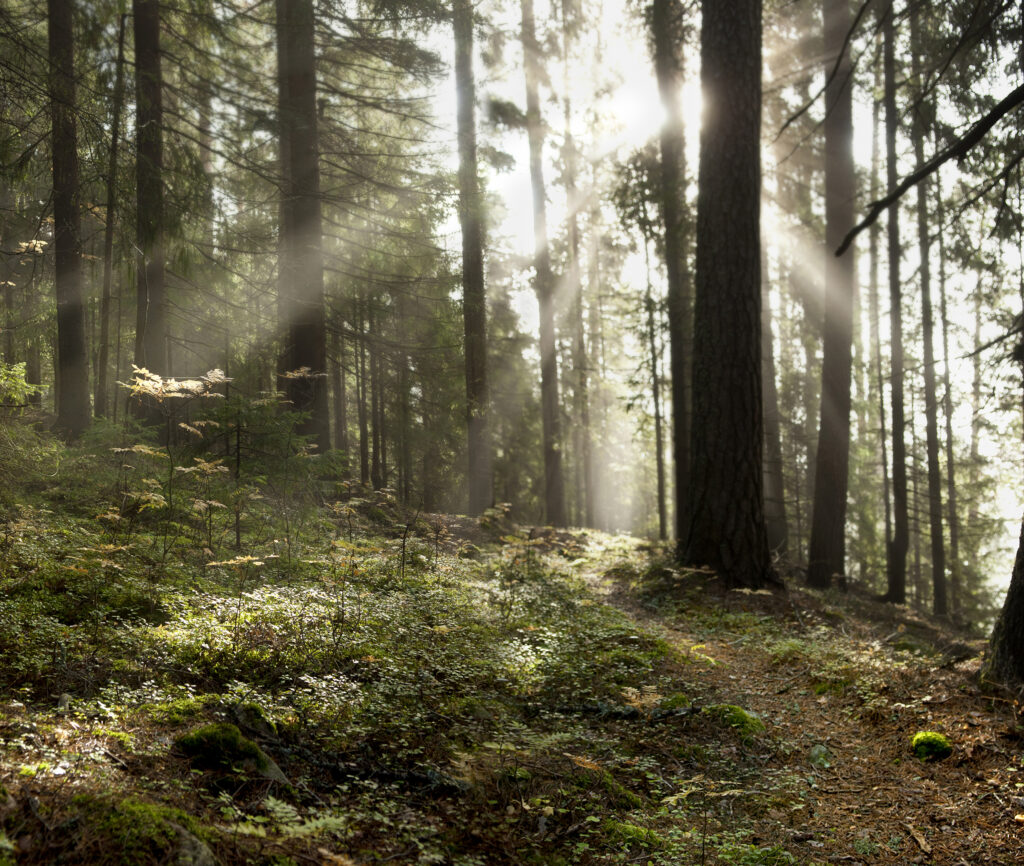
Nature conservation has a long tradition in Kuopio. At the time of its establishment in 1928, the Puijo nature reserve was one of Finland’s first nature reserves. The core areas of Korkeakoski and Pisa have also been protected for a long time. The first protected area at Korkeakoski was established in 1947 and in 1963 at Pisa.
Nature reserves include diverse habitats such as old-growth natural forests, herb-rich forests, mires and bird lakes. Some of the areas are protected due to the endangered species growing there.
The area of nature reserves owned by the city of Kuopio is approximately 780 hectares. In addition to this, the city has sold approximately 46 hectares of forest land to the state for nature conservation purposes.
The most important nature reserves owned either entirely or to a large extent by the city are the old-growth forests of Puijo (215 hectares), Kolmisoppi-Neulamäki (230 hectares) and Vanuvuori (125 hectares). All three areas are also part of the EU Natura network.
The Kuopio region also has numerous nature reserves owned by private parties and the state. If necessary, information on nature reserves located on private land can be obtained from the North Savo ELY Centre. Information on state-owned nature reserves is provided by the Parks & Wildlife Finland unit of Metsähallitus.
Approach nature with respect
Nature reserves are established in areas with specific natural values, such as endangered or rare habitats and species. These areas will be protected so that they can continue to exist.
So please follow the instructions below when moving in nature reserves:
– Avoid wearing out the terrain by staying on marked trails and existing paths.
– Campfires are only allowed at official campfire sites.
– When a forest fire warning is in effect, no fire may be made at all.
– Take your trash with you.
– Keep pets on a leash.
The nature reserves owned by the city are listed below
-
Puijo nature reserve was one of the first nature reserves in Finland when it was established in 1928. Back then, it was slightly larger than 60 hectares; today, Puijo has three nature reserves with a total area of approximately 212 hectares. The majority of this area is part of the EU’s Natura 2000 network. The nature reserve includes the most valuable parts of Puijo, such as the herb-rich forests of Satulanotko and Antikkalanrinne, and boreal natural forests in Kokonmäki and the old nature reserve, which are in many places over 150 years old. The City and the Kuopio Parish Union both own a little over 100 hectares of the Puijo nature reserve.
The ridge of Puijo is formed by the oldest rock types on Earth, between 1,870 and 2,500 million years old. Only the peaks made of the most durable rock types remain from this time, like Puijo, which rises 232 meters above sea level. As a memory of the most recent glacial period, the slope of Puijo contains the rocky coastline of the Yoldian Sea, which covered the area about 10,000 years ago.
The flora in the area is quite diverse and rich in herbs. It includes several types of Oxalis-Maianthemum type forests as well as moist herb-rich forests. The forest in the area is mainly spruce-dominated and partly hardwood-dominated mixed forest. More than 350 vascular plant species have been found in Puijo, with many rare and endangered species among them. Plant rarities include wall lettuce, mole ladder fern and drooping woodreed. Puijo is also the most significant habitat of the moss Plagiomnium drummondii, which can only be found in Eastern Finland in the EU. Many rare and endangered fungi of the group polypore grow in these forests, such as Gloeoporus pannocinctus, Antrodia mellita and Antrodia piceata. The Antikkala ski slope is home to a rich variety of meadow species.
The bird population in the area is also diverse and abundant, with Greenish warblers, red-breasted flycatchers and three-toed woodpeckers known to nest in the old-growth forests.
Puijo is one of the most popular recreational areas in Kuopio, where it is possible to hike, ski or pick mushrooms and berries. It is recommended to walk on the trails in nature reserves and in herb-rich forests to protect them from wear and erosion. Puijo has three marked nature trails, all of which are approximately two kilometres long. In addition, there is a comprehensive range of outdoor trails in the area, which serve as the foundation for skiing loops of different lengths in winter. The usage of mountain bikes is only possible on outdoor routes, roads and marked mountain bike routes in the nature reserve.
-
The Kolmisoppi-Neulamäki area is a nature reserve of approximately 230 hectares and located a few kilometres away from the city centre. The area is part of the European Union’s Natura 2000 network. The city decided to protect the area in the early 1970s, and in 2000 it became an official nature reserve. The objective of protecting the area is to preserve and develop the forest environment, landscape and rare vegetation.
Since the 19th century, the Kolmisoppi-Neulamäki area is known for its diverse herb-rich forest and rock vegetation. So far, more than 500 plant species have been found in the area, of which approximately 300 are vascular plants. The lush streamside groves are home to ostrich ferns, fly honeysuckle and small-leaved linden, which persists at the northern limits of its range.
Vuorilampi, which is located entirely within the protected area, is an oligotrophic brown-water forest pond. The most valuable rock plants grow on the cliff on the eastern side of the pond, where angular Solomon’s seal, maidenhair spleenwort and wild thyme can be found. Several rare species of moss and lichen grow on the rocks as well. Plant rarities in the area include drooping woodreed, upland bentgrass and Drummond’s plagiomnium moss. Kolmisoppilampi is naturally lush, and its diverse species include long-beaked water feathermoss, phoenix moss, drepanocladus mosses and scorpion feather moss.
The area is a favourable habitat for many animals. Various mammals can be found here, from large elks to tiny shrews. There have been observations of flying squirrels and bats as well. The most diverse, and most important fauna in regard to conservation, can be found in old-growth forests. As these areas are rich in decaying wood, they provide a habitat for many insects as well as rare bird species like the three-toed woodpeckers, red-breasted flycatchers and greenish warblers. In recent years, red-flanked bluetails have also been spotted in the protected area.
The nature reserve is managed in accordance with the management and use plan. Nature’s progression is only interfered with when it is necessary due to conservation goals. Various restoration measures have been carried out in the area, such as the removal of spruce trees shading herb-rich forest areas. Forest areas with little variation in trees have been diversified by increasing the amount of decaying wood and deciduous trees. The Pölkkypuronsuo mire in the eastern part of the area has been restored by blocking ditches and returning the stream that runs through the swamp to its natural bed.
The Kolmisoppi-Neulamäki area is a popular outdoor and recreational area. It is possible to ski and hike in the area, as well as forage berries and mushrooms. However, visitors should stay on the marked trails in the sensitive herb-rich forests and rocky areas. There are signed nature trails in the nature conservation area between two and five kilometers in length, with both summer and winter routes.
-
The South Kallavesi archipelago nature reserve consists of small islands and rocky islets with a combined area of approximately 14.3 hectares. Except for two islands, the islands and islets are located within the Natura 2000 site and are of particular importance to the area’s gulls and waterfowl. The landscape is characterized by rocky terrain and Scots pine-dominated forests. One of the islands, Hukkanen, contains a Sami cairn (lapinraunio) protected under the Finnish Antiquities Act. Landing sites have been constructed on the larger islands for boaters and paddlers. The area was protected as part of Finland’s anniversary campaign “My nature gift to a 100-Year-Old”, and it is also part of the Kuopio national urban park.
-
The Halmejoki herb-rich forest in Ranta-Toivala is a nature reserve of approximately 24 hectares in size which is part of the European Union’s Natura 2000 network. Valuable herb-rich forests can be found in Halmejoki, ranging from dry pastures to damp herb-rich forests and groves. The most beautiful groves in the area can be found by the streams in the north and along the Halmejoki itself, where ostrich ferns and other large ferns form jungle-like vegetation. The herb-rich forests of the Halmejoki River in Northern Savo are home to rare southern plant species, such as creeping buttercups and hedge woundworts. Rare touch-me-not balsam, the signature species of the Halmejoki herb-rich forest, is especially abundant in the humid birch-dominated groves. Poa remota and northern sweetgrass, on the other hand, represent demanding eastern taiga species.
The herb-rich forests of Halmejoki also bear witness to the effects of human activity, as traces of the area’s past as fields and pastures are still visible in the flora. Maintenance work was carried out at the beginning of the 2000s, aiming to restore and diversify the nature in the area. To preserve the predominance of deciduous trees, spruces have been removed from the grey alder forests in the northern part. Birch-dominated former fields have been restored to moist groves by blocking the ditches, and the old spruce groves have been diversified by increasing the amount of decaying wood.
The lushness of herb-rich forests and the dominance of deciduous trees are very attractive to birds. There are exceptionally many garden warblers, wood warblers and blackcaps nesting in the area. The knotty birch and alder groves are popular with wrens, often leading to several pairs living within earshot of each other. Rare birds inhabiting these forests include long-tailed tits and lesser spotted woodpeckers; a white-backed woodpecker has also been seen in aging and decaying birch groves. The spruce-dominated forests on the upper slope are home to greenish warblers and red-breasted flycatchers.
The Halmejoki nature trail is about 2.5 kilometres long, and a lean-to shelter and campfire site maintained by the village association can be found there.
-
There are two protected areas of rocky, natural pine forest in Karhoonsaari. They belong to the Natura 2000 network and have a total area of approximately 13 hectares. These nature reserves are characterised by steep cliffs, but there is also lush vegetation elsewhere on the island.
170 wild vascular plant species and forty different moss species have been found on Karhonsaari. The island is also a habitat favoured by many animal species. Karhonsaari has an arboretum where nearly a hundred different tree and shrub species have been planted. The arboretum is home to beautiful old larches, lindens, oak trees and alpine roses, the oldest of which date back to the early decades of the 20th century.
Karhonsaari is located on Lake Kallavesi, a short boat trip from the city. There is a marked trail on the island, Karhonkierto, which runs through the nature reserves as well.
-
Katiskaniemi has a nature reserve of about 14 hectares, the most valuable parts of which are herb-rich forests dominated by deciduous trees and magnificent cliffside pine forests. The reserve was established in 2000. The herb-rich forests are at their finest in the former fields and meadows located in the middle of the peninsula. Plants that are growing in the area include fly honeysuckle, hedge woundworts, mezereons and baneberries. Gloiodon strigosus, a wood-decaying fungi, can also be found in the area. The peninsula is also home to a diverse bird population: lesser spotted woodpeckers are for example known to thrive among the grey alders of the shoreline groves. Old aspens are an important habitat for flying squirrels.
You can go walking and skiing in Katiskaniemi, as well as pick berries and mushrooms. There is a two-kilometre nature trail marked in the area and it is recommended to walk on the trails in order to preserve the sensitive nature of the area.
-
In the largest open water area in Kallavesi, the Central Kallavesi archipelago, is a nature reserve consisting of more than 60 islands of different sizes. The total area of protected land is approximately 28 hectares, and the region is part of the Natura 2000 network.
Scenically important groves can be found among the cliffs and rocks of many of the pine-dominated islands. There is spruce growing in the interior of a few islands, and sometimes even dense deciduous thickets. On the other hand, some of the smaller islands are completely treeless. The beaches are often rocky and pebbly, with rather barren beach vegetation, except in sheltered bays. The area has limestone cliffs and old-growth forests in their natural state with flora representative of these locations.
The Central Kallavesi archipelago is a very valuable conservation site for birds. Species found here include common gull, lesser black-backed gull, common tern and red-breasted merganser. It is also fairly common to see herring gulls and other gull and waterbird species in the archipelago. Our provincial bird, the black-throated loon, nests in these calm open waters.
The area is protected to ensure not only the preservation of valuable birdlife but also the preservation of this unique archipelago landscape.
The archipelago is an interesting nature and outdoor recreation destination and popular for picking mushrooms and berries. The waters owned by the city are attractive for lure and net fishermen. There are canoeing and boating routes in the area and several campfire sites and fishing huts have been built for visitors on different islands.
-
The Kivijärvi mire is a natural mire south of Kurkimäki. There is an old spruce forest adjacent to the mire in the Kivijärvi peninsula which is an integral part of the larger area and creates magnificent scenery. The mire has various subtypes: greater sedge bog, cottongrass marsh, dwarf brush marsh and heath carr. In its center, the mire has a very high water table.
The protected area is approximately 10.5 hectares. The purpose of conserving the area is to protect both the mire and forest habitat by preserving it intact.
-
The Koijoki carr nature reserve is a 3.8 hectare-wide conservation site for lush mires. The purpose of conservation is to protect the mire and forest habitats of the area by preserving it intact.
The area has sturdy, spruce-dominated, herb-rich, fern-type forests, lush heaths and wood horsetail carrs. Ostrich fern is growing abundantly in some places. Other demanding species of herb-rich forests in this area include wood millet, bottle sedge, wood stitchwort, cudweed, northern sweetgrass and small enchanter’s nightshade. At the border of the protected area, the river Koijoki flows in its natural channel.
-
The Korkeakoski nature reserve in Maaninka is one of the oldest protected areas in North Savo as it was established in 1947. The canyon of Korkeakoski is located there, a steep-edged ravine valley about two kilometres long and 41 metres deep. The river Korkeankoskenjoki flows at the bottom of the canyon.
The protected ravine valley has a total area of approximately 35 hectares and is part of the European Union’s Natura 2000 network. Some of the protected area is owned by the City of Kuopio, some by the Kuopio Naturalists’ Society and others by private landowners. With about 36 metres, the Korkeakoski cascading rapids are the highest in Finland. The water originates from several small lakes that run into Lake Maaninkajärvi in Tuovilanlahti, which is bordered by steep rock walls.
The vegetation is lush and versatile thanks to special topographical and micro-climatic factors, enabling an abundance of demanding and rare species. Examples are drooping woodreed, wood stitchwort, rock campion, wood millet, baneberry and small enchanter’s nightshade. Ostrich ferns and other large ferns grow in many places at the bottom of the ravine. The trees at the bottom of the canyon and on its steep slopes are mostly sturdy spruces that are common in fresh and herb-rich forests. Birches, goat willows, rowan trees and grey alders are also abundant in the area.
The natural spruce forests of Korkeakoski are rich in dead wood and attract many types of birds that nest in old-growth forests. Greenish warblers, red-breasted flycatchers and three-toed woodpeckers are familiar visitors in the area.
There is a hiking trail of about 5.5 kilometres, the Kanjoninkierros trail, which runs partly in the nature reserve.
-
The Korsunmäki area, part of the Natura 2000 network, consists of several nature reserves, four of which are owned by the city. The area forms a diverse conservation complex of rich fens, herb-rich forests, and rocky outcrops. The city owns the Korsunmäki canyon 2 nature reserve as well as the Korsumäki 6, 7, and 8 nature reserves.
The Korsunmäki canyon 2 nature reserve covers approximately 19.5 hectares and was established in 2014. The reserve contains forests of varying ages, including some of the oldest stands of boreal natural forest, drained wooded mires, more natural shoreline wetlands, and herb-rich forests. The area was protected under the Forest Biodiversity Programme for Southern Finland (METSO). The purpose of the protection is to conserve forest ecosystems by maintaining the area in a natural condition.
Located on a northwestern slope descending towards Lake Tervalampi, the reserve consists of near-natural, mature mixed forests of herb-rich and mesic heathland, dominated by spruce and pine. Large aspens and birches are also present, and deadwood is abundant throughout the area. The reserve includes several cliffs and patches of herb-rich forest and swamp woodland. The forests provide important habitat for many mosses and lichens associated with natural forest ecosystems, including the threatened old-growth moss (Anastrophyllum hellerianum). Threatened species found in the area also include the Siberian flying squirrel and the Eurasian pygmy owl. The natural forests additionally provide suitable habitat for bird species such as the red-breasted flycatcher and the eastern Bonelli’s warbler.
Restoration work has been carried out in the swamp forests around Tervalampi by constructing dams to restore the hydrology of previously drained peatlands. The work was implemented during 2021–2022 with funding from the Ministry of the Environment’s Helmi Habitats Programme.
Korsumäki 6 is an area of approximately 2.1 hectares and forms part of the national mire conservation programme known as “Korsumäen Letot” (Korsumäki Rich Fens). The reserve was established in 1999, with the aim of preserving the mire and its surrounding forests in their natural state.
Korsumäki 7, protected in 2000, covers approximately 8.3 hectares. The area contains herb-rich forests, herb-rich woodland, and swampy herb-rich forest habitats. The luxuriant vegetation is largely the result of dolomitic limestone in the bedrock. The reserve hosts valuable calcicolous moss communities and abundant fly honeysuckle (Lonicera xylosteum). The purpose of the protection is to safeguard the herb-rich vegetation and the demanding species associated with it.
Korsumäki 8 covers approximately 4.2 hectares and was established in 2021. The area is dominated by mesic spruce forest, with aspen occurring as a mixed tree species. Herb-rich and sub-xeric heath forest types are also present. The reserve supports populations of the vulnerable downy kidney lichen, as well as the near-threatened velvet shingle lichen and Norway horn lichen. These species reflect the area’s ecological value and the high quality of its forest habitats.
-
The Kylmämäki herb-rich forest is located east of Lake Matkusjärvi on the shore of Valkealampi south of Karttulantie. The vegetation in the area is mostly a fresh spruce-dominated herb-rich forest, and many demanding herb-rich forest species grow in the area, the rare pycnoporellus fulgens and the tree lungwort. The southeastern part of the area is included in the national herb-rich forest conservation programme and the Finnish Natura network. The protected area is approximately 6.9 hectares. The purpose of protecting the area is to protect herb-rich vegetation and forest nature and to safeguard the habitats of the area’s demanding species.
-
Of the Läpisaaret Islands located in North Kallavesi, the western one is a protected island of approximately 4.9 hectares, designated as a nature reserve in 1990. The island is characterized by herb-rich forest habitats and is dominated by birch trees. The bays on the eastern and southern sides of the island serve as important spawning grounds for fish and nesting areas for birds. The purpose of the protection is to preserve the island in an undeveloped state and to allow its forests to develop naturally without human intervention. As a natural area, the island is important for the conservation of both forest and shoreline vegetation. The area is also used for recreation.
-
The wooded slope of Matkusjärvi’s eastern shore is a nationally significant habitat for herb-rich vegetation. This herb-rich forest located in southern Kuopio is part of the EU’s Natura 2000 network and is also part of the national herb-rich forest protection programme. The City of Kuopio owns three parcels in the southern part of the grove, with a total area of approximately 4.1 hectares.
Due to the calcareous effect of the bedrock in the area, the vegetation in the area is fairly lush and diverse. The area is protected with the aim of protecting the herb-rich vegetation in the area and safeguarding the living conditions of the demanding species inhabiting the groves.
-
The Matkusjärvi nature reserve is a habitat of the specially protected species northern rock-jasmine (Androsace septentrionalis). The reserve covers approximately 0.1 hectares and was established in 2021. It is located on the embankment of a disused railway line. The embankment is open and meadow-like in character, consisting of boulder-rich glacial till. Northern rock-jasmine is a critically endangered species, and the Matkusjärvi nature reserve contains the only known occurrence of the species in North Savo. The site requires regular management to maintain the open habitat conditions necessary for the survival of northern rock-jasmine and to prevent the area from becoming overgrown.
-
The Mustajärvi crag nature reserve is a 12.6-hectare protected area that was designated in 1974. The reserve is a significant geological formation, and the steep cliffs rising above Lake Mustajärvi create a landscape of exceptional scenic value, which was the primary reason for its protection. The rocky outcrops are covered by extensive and striking lichen communities, while the shoreline cliffs rise in places almost vertically above the lake. The difference in elevation between the surface of the lake and the summit of the hill is approximately 40 metres. The nature reserve is adjacent to the Niittylahti and Mustamäki nature reserves.
The Niittylahti area is a popular destination for outdoor recreation and hiking. The Mustajärvi crag is situated along a marked recreational trail.
-
The Mustamäki nature reserve is a protected area of approximately 2.6 hectares, established in 2021. The reserve is situated between two other protected areas, the Mustajärvi crag nature reserve and the Niittylahti nature reserve, forming part of a larger network of conserved habitats. The area consists mainly of mature spruce-dominated heath forest, with aspen, pine, birch, and goat willow also occurring throughout the site. In the southern part of the reserve, there is a herb-rich ostrich fern grove surrounding a small, concealed stream. The reserve is also home to the near-threatened kidney lichen (Nephroma bellum), which contributes to the area’s ecological value and highlights the importance of conserving its mature forest habitats.
The Niittylahti area is a popular destination for outdoor recreation and hiking. The Mustamäki nature reserve is situated along a marked recreational trail.
-
Muurainen is an island with an area of about 15 hectares located in North Kallavesi, which, with the exception of a few cottage plots, has been completely protected as a nature reserve.
The forests in the northern part of the island are mainly pine heaths. Mixed forests dominate the other parts of the island. The hollows in the middle of the island have turned into a carr.
The area was protected in 1990 with the aim of keeping the island unbuilt and safeguarding the natural development of the island’s forests into old-growth forests. In addition, the aim has been to secure limited recreational use of the island.
-
The Neulaniemi nature reserve is a site where the specially protected fungal species stream fibrecap (Inocybe multicoronata) occurs. The protected area covers approximately 0.8 hectares and was designated in 2006. At the time of its protection, Neulaniemi was the only known location of the species in Europe. The reserve includes a herb-rich riparian forest and its surrounding environment. The dominant plant species include lady fern, marsh violet, wood horsetail, and enchanter’s-nightshade. The area also supports hedge bedstraw and sweet grass. The tree layer is dominated by spruce, with birch and black alder also present, as well as individual large aspens. Species in the shrub layer include, for example, rowan and bird cherry. A natural stream runs through the area, partly underground as a concealed stream, and the site contains seepage surfaces and spring-fed habitats. In addition to stream fibrecap, the area is home to other demanding and threatened fungal species, including dwarf fibrecap and meadow puffball.
-
The Niittylahti nature reserve covers approximately 27.1 hectares and consists of four separate sections. The first section is adjacent to the Mustajärvi crag nature reserve and the Mustamäki nature reserve. In its northern part, the area consists of spruce-dominated heath forest, with pine and birch occurring in places, as well as occasional grey alder, goat willow, and aspen. In addition to mesic heath forest, the area includes patches of bilberry-rich spruce swamp forest and sub-xeric heath forest. Deadwood occurs in moderate quantities throughout the area. Threatened species present include the vulnerable goblin gold moss (Schistostega pennata) and vulnerable smooth kidney lichen (Nephroma resupinatum), as well as the near-threatened lungwort lichen (Lobaria pulmonaria). In the northwestern part, there is mature pine-dominated heath forest with standing dead pines and old thick-barked pine trees. The tree stand also includes spruce and birch.
The second and third sections are extensions of the Tonkkurinmäki nature reserve. The eastern extension area consists of mature spruce-dominated heath forest with individual pines, birches, aspens, and rowans. In addition to mesic heath forest, the area contains both sub-xeric and herb-rich heath forest. Threatened species present include occurrences of the near-threatened coral polypore and near-threatened rosy bracket fungus. The northern extension area is a mature spruce-dominated herb-rich forest. The tree stand also includes pine, birch, and rowan. The area contains abundant deadwood and occurrences of the near-threatened kidney lichen (Nephroma bellum).
The fourth section is the Vääräjärvi area, which consists of spruce-dominated heath forest. In addition to spruce, the area supports pine, birch, aspen, grey alder, goat willow, juniper, and rowan. The dominant habitat type is dwarf-shrub pine mire. The area contains a moderate amount of deadwood and an occurrence of the vulnerable goblin gold moss (Schistostega pennata).
-
The Parviaisniemi nature reserve is a site where the specially protected lichen species olive cetrelia (Cetrelia olivetorum) occurs. The area, protected in 2018, is located on the northeastern shore of Parviaisniemi and covers approximately 0.2 hectares. Olive cetrelia is a critically endangered species and is not known to occur elsewhere in North Savo.
-
The Peltola forest nature reserve consists predominantly of spruce-dominated forest. At the time of the protection decision in 2013, the forest stand was estimated to be approximately 120 years old. The reserve covers an area of about 4.3 hectares and was protected as part of the Forest Biodiversity Programme for Southern Finland (METSO). In addition to spruce, the area supports birch and pine, as well as aspen along the edges of the reserve. The dominant habitat type is mesic heath forest, although the area also contains sub-xeric heath forest and patches of spruce swamp forest. The Siberian flying squirrel has been observed in the area. The purpose of the protection designation is to preserve the forest ecosystem in its natural state.
-
The Pieni Neulalahti herb-rich forest is located in Neulaniemi, along a stream flowing from Pieni Neulalampi to Pieni Neulalahti. The protected area is approximately 0.9 hectares.
The specialty of the area is a small-leaved linden grove. In other respects, the vegetation of the protected area is mostly formed by a spruce-dominated herb-rich forest. Mezereon, fly honeysuckle, wood millet and baneberry are among the species found in the area. Other valuable plants typical in the area include cudweed, hedge woundwort, wonder violet and great-spur violet.
The area was protected at the beginning of the 1990s with the aim of preserving the linden grove in its natural state and safeguarding the life chances of its demanding plant species.
-
The Pieni-Tarpinen herb-rich forest nature reserve is a protected area of approximately 4.7 hectares located in Nilsiä, and it was designated as a nature reserve in 2003. The area is included in both the National Grove Conservation Programme and the Natura 2000 network. The reserve contains a partly swampy, lady fern-dominated herb-rich forest, as well as a rich fen located along the shore of Pieni-Tarpinen pond. These are the most valuable habitat types within the area. Rare species found in the reserve include, for example, shining hookeria moss and hops. The purpose of the protection is to preserve the area in its natural state and to safeguard its wetland and forest habitats, as well as its demanding species.
-
The Piiroomäki herb-rich forest is a regionally significant grove area in Pölläkkä, Riistavesi. This 15.3-hectare nature reserve is protected with the aim of safeguarding the herb-rich forest vegetation and small waters of the area as well as the habitats of the area’s demanding species.
In terms of vegetation, the most lush meadows formed by large ferns are located in the surroundings of the streams and brooks running on the slopes of the hills. In other parts, the area is covered by fresh and grove-like heath. In some parts you can find Oxalis-Maianthemum type forests as well. The main tree species in the area is the spruce. The majority of the trees in the area are almost 100 years old. The area has been allowed to develop for a long time without human activity. The area’s grove and carr vegetation includes, among other things, ostrich ferns, lady ferns, baneberries, northern sweetgrass, wood millet and cudweed.
-
In the Potkunsaari island of Kallavesi, next to Karhosaari is one of Kuopio’s most important natural occurrences of small-leaved linden. A nature conservation area of about one hectare has been established in the area to protect small-leaved lindens.
Several dozens of small-leaved linden trees grow in the area, including trees of considerable size as well as trees of smaller sizes. The vegetation in the area is lush and herb-rich. The area is part of the Natura 2000 network as part of the Halmejoki-Karhonsaari-Potkunsaari whole.
-
Pyöreäsuo is a small bog of about 1.2 hectares. Aukeasuo is a watery hardwood morass, which has a surface area of about one hectare. These small marshes, already protected as a nature reserve in the 1970s, are located in the Petonen district, near the Pyörö school.
-
The Pörönmäki nature reserve is an area of approximately 5 hectares located in Karttula, and it was established as a nature reserve as early as 1966. The area was protected because of its scenic value and its beautiful and diverse forest landscape.
Pörönmäki features an approximately 17-metre-high observation tower, and a recreational trail passes through the area, connecting to the surrounding trail network. Near the reserve there is also a lean-to-shelter situated at a location with excellent views.
-
The Rasinmäki herb-rich forest is an area of about 7.8 hectares located on the slopes of the Pieni Neulamäki. The protection of the area was done on with the aim to preserve the natural state of the herb-rich forest and to safeguard the habitats of the area’s demanding plant species. The area is part of the EU’s Natura 2000 network.
The predominant vegetation type of this spruce-dominated northeastern part of Rasinmäki is wet and lush filices-type herb-rich forest. The protected area also has a wet hollow that mostly resembles a heath-type carr. This herb-rich forest with it spruces has also plenty of linden trees, bird cherries, mezereons, fly honeysuckles and dog snowball bushes. The area’s plant species also include several demanding herb-rich forest species, such as the mole ladder fern, ostrich fern, baneberry, three-nerved sandwort and both wonder violet and great-spur violet.
-
The Rukasniemi herb-rich forest, which is of national importance, is one of the many herb-rich forests in Laivonsaari. It is a part of the extensive Natura site of Laivonsaari, which is consists of diverse herb-rich forests and natural forests.
By the shoreline the vegetation of the Rukasniemi grove is dominated by fly honeysuckles and snowball bushes. The forest changes heading northwards, turning into a spruce-dominated herb-rich forests with an abundance of wood sorrel and herb Paris. The protected area is approximately 4.8 hectares.
-
Silmäsuo-Kukonharja, which is located in Riistavesi, is a nature reserve of approximately 10 hectares. It consists of two esker kettles of great scenical and geological value. The kettles are greater sedge bog at the bottom, whereas Silmäsuppa has a beautiful water pool. The slopes of the kettles are dominated by pine and spruce with moderate amounts of decaying wood, resembling natural forests in places. The purpose of protecting the area is to protect its valuable natural landscape, geological formation as well as its mires and forests.
-
The Sormulanvaaru nature reserve of approximately 9.5 hectares is located in Riistavesi. It is an esker ridge of geological, botanical and scenical value that rises more than 40 metres above the nearby waters. The esker has plenty of woundwort and vast patches of bearberries.
In the 1990s, gravel was taken from both ends of Sormulanvaaru, but the area was landscaped after the gravel extraction ended. Now a young pine forest grows in the landscaped area. Elsewhere on the slopes of the esker are pine forests that are beginning to look like natural forests. Nature management work has been carried out in the area, including thinning of dense pine stands and clearing of deciduous thickets on the slopes of the ridge. The growth conditions for woundworts have been improved by revealing mineral soil near the vegetation. The number of woundwort tufts has been monitored regularly for nearly twenty years.
-
Tervaruukki spruce bog is a nature reserve of approximately 2.3 hectares in size. It is located in Neulaniemi, north of the extensive nature reserve in Kolmisoppi-Neulamäki. The purpose of protecting the area is to safeguard the viability of the area’s demanding plant species. The area is part of the EU’s Natura 2000 network.
Here in the nature reserve, in the surroundings of a spring, grow rare woodruffs and bog stitchworts. Other demanding herb-rich plants found in the area include the mezereon, cudweed, snowball bush and ostrich fern.
-
The Tervaruukinniemi nature reserve borders Lake Kallavesi and the Kolmisoppi–Neulamäki nature reserve and covers an area of approximately 17.3 hectares. It was designated as a nature reserve in November 2025, making it one of the newest nature reserves in Kuopio. The area is part of the Kolmisoppi–Neulamäki Natura 2000 site, and the purpose of its protection is to conserve forest habitats in their natural state. The area also has scenic and recreational values.
The terrain is varied and small-scale in character, consisting of rocky hilltops, depressions, and high cliff formations. The forest has not been managed and is predominantly old-growth. Pine is the dominant tree species on the higher ground, while spruce dominates the depressions. In the southern part of the area, some pines are up to 140 years old and have characteristic thick, plated bark. The pine forests in the northern part are younger and have been partly thinned. The spruce stands are mostly old and natural, with birch and aspen occurring as mixed tree species. The southern part of the reserve consists mainly of mesic heath forest, while the northern part is dominated by herb-rich heath forest with small patches of herb-rich forest habitats. Tervaruukinniemi complements the previously protected Kolmisoppi–Neulamäki nature reserve.
-
The Tonkkurinmäki ridge, located in Niittylahti, is a protected area of approximately 12.7 hectares. The summit of the rocky ridge rises to an elevation of about 150 metres, offering great views towards Lake Kallavesi. The landscape of the reserve is dominated by robust pine and spruce forests. The area was designated as a protected area in the mid-1970s for the conservation of its geological features, natural landscape, and forest vegetation.
The Niittylahti area is a popular destination for outdoor recreation and hiking. The Tonkkurinmäki nature reserve is situated along a marked recreational trail.
-
The area of Vanuvuori nature reserve, which is part of the EU’s Natura 2000 network, is approximately 125 hectares in size. The City gained ownership of the nature reserve through various land sales by several different landowners. Today, the City owns the Vanuvuori nature reserve almost entirely.
Vanuvuori is located on the shore of Hiltulanlahti and rises nearly 140 metres above Kallavesi. The profile of Vanuvuori stands tall, dominating the landscape of southern Kuopio. The top of Vanuvuori is formed by three different peaks: Ukko-Vanu, Akka-Vanu and Pikku-Vanu. The highest peak, Ukko-Vanu, is 212 metres above sea level and is the fourth highest hill in Kuopio. Between the hills is Pirtulampi, a small pond still in natural state.
The upper slopes of Vanuvuori are steep and rocky with sturdy pine forests growing on the slopes. The gaps between the hills and the lower slopes of the hills are mainly spruce-dominated and more lush. In addition to spruce, old deciduous trees, such as birch and goat willow, grey alder and aspen, grow in the hollows. In places, there are plenty of dead spruce trees, aspen trunks and decaying spruce and aspen trees. Below the cliff of Akka-Vanu is a hollow with a lot of decaying wood.
Vanuvuori also has a lot of birds that thrive in old-growth forests. Pygmy owls, red-breasted flycatchers, greenish warblers and red-flanked bluetails have been encountered in the area. Three-toed woodpeckers, grey-headed woodpeckers, eagle owls and capercaillies also frequent the area.
Vanuvuori is a popular hiking and recreational area. Moving by foot and by skiing is allowed in the area, as is berry-picking and foraging for mushrooms. Hikers are encouraged to use the trails in the area to avoid excessive wear on the terrain.
-
Vierunmäki nature reserve is an 11.5-hectare protected area located in Riistavesi. The reserve consists of a steep, pine-dominated rocky slope situated right on the shore of a lake called Iso-Vieru. The basis for the protection of the area is to achieve a favorable conservation status for forest ecosystems and forest habitat types. The area was protected as part of Finland’s anniversary campaign “My nature gift to a 100-Year-Old”.